
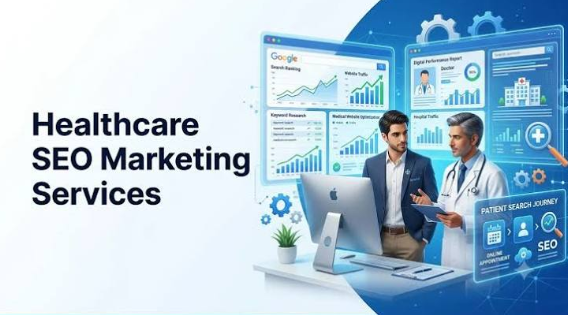
Patients don’t just rely on word of mouth when looking for healthcare providers anymore, as they are in the digital era. Most people use search engines to locate doctors, clinics, hospitals, and healthcare services. This change is making Healthcare SEO an indispensable marketing strategy for healthcare organizations. An optimized website can help boost visibility online, increase patient numbers and establish trust and confidence in the community. For best results, many hospitals and clinics consult an SEO expert in Kolkata who understands both healthcare and advanced SEO strategies.
Why SEO Matters for Healthcare Websites
One of the most competitive industries online is healthcare. Whatever kind of practice you have, whether it’s a private clinic, a speciality practice, or a hospital, your patients are looking for your services online daily. If your website is not optimized, you can be buried behind competitors when people search for your website.
By optimizing a healthcare website for search engines, Effective Healthcare SEO will help it achieve higher rankings, allowing patients to easily find the services that are relevant to them. These higher rankings can help generate more traffic to the website, more appointments, and better brand credibility.
Knowing SEO for Healthcare Professionals
SEO for Doctors is the process of optimizing different parts of a site to satisfy search engines and end user’s requirements. This involves optimizing website performance, producing valuable content, optimizing service pages and ensuring the website is mobile-friendly.
Patients frequently look for particular treatments, symptoms or specialists. Healthcare providers can engage with patients who are actively seeking medical information and services by targeting relevant keywords and creating informative content.
Healthcare companies are also one of the sectors where local SEO is crucial. The majority of patients search for care providers in their immediate vicinity. Focusing on optimizing Google Business Profile, keeping contact details up to date and gathering patient reviews can have a major impact on a business’s local search visibility.
Here are some of the key steps to get started with Medical Practice SEO
1. Perform Keyword Research
The first step in a successful Medical Practice SEO strategy is to determine which keywords your patients are using when they go online. This is where the importance of keyword research in SEO becomes clear: without proper research, you may target terms that patients never search for.
For instance, a cardiologist might aim for Keywords that relate to heart treatment services, and a dermatologist could aim for Keywords that relate to skin treatment-related searches.
2. Optimize Website Content
All pages on your site should offer useful and up-to-date content. Develop comprehensive service pages, FAQs, patient resources, and blog articles on common health issues.
The content you put on your website, if well structured, will allow both users and search engines to better understand your site. Include relevant keywords, concise paragraphs and clear headings throughout.
3. Improve Technical SEO
Technical optimization will help your website run smoothly. Important areas include:
- The website loads quickly. The website loads quickly.
- Mobile responsiveness
- Secure HTTPS connection
- Proper URL structure
- Easy navigation
- XML sitemap implementation
A well-designed web page is user-friendly and can have a positive impact on search engine results.
5. Optimize for mobile and voice search
Local patients play a major role in the healthcare industry. Optimize Google Business Profile, ensure information is consistent throughout online directories, and encourage happy patients to leave reviews.
Local optimization is the method that will bring healthcare practices to the forefront of map listings and location-based searches, bringing in the right kind of traffic.
6. Develop High-Quality Learning Materials
Before making an appointment, patients often look for answers to health-related questions. Your practice can be a credible source of information through informative blogs, treatment guides, and health tips.
The regular updates of valuable content to your website also convey relevance and authority to search engines. The trending keywords for SEO in your health blogs help capture seasonal searches like flu symptoms or dengue treatment.
How SEO Increases Healthcare Website Traffic
SEO for Healthcare can be one of the most significant advantages of having a website other than paid advertising because it can provide continuous website traffic. Paid campaigns end when the budget is used up, while SEO continues to bring in patients as long as it can.
An increase in ranking for keywords that are more relevant will lead to visitors who are actively looking for healthcare services visiting your website. These visitors typically have a very high-quality conversion rate as they are already looking for a healthcare product or service. This is why understanding that mobile-friendly websites are essential for SEO Success directly impacts your Healthcare website Traffic.
Conclusion
SEO has become an integral part of healthcare marketing. SEO for Healthcare can be advantageous to any healthcare website, from the ability to be more visible online to attracting new patients and establishing trust.
In an era where the healthcare industry is increasingly moving online, adopting effective SEO strategies for doctors, investing in Medical Practice, and learning about the future of voice search SEO can help them build a solid online presence and stay competitive. Building fundamentals can be a stepping stone for sustainable growth and increased patient engagement in the future.